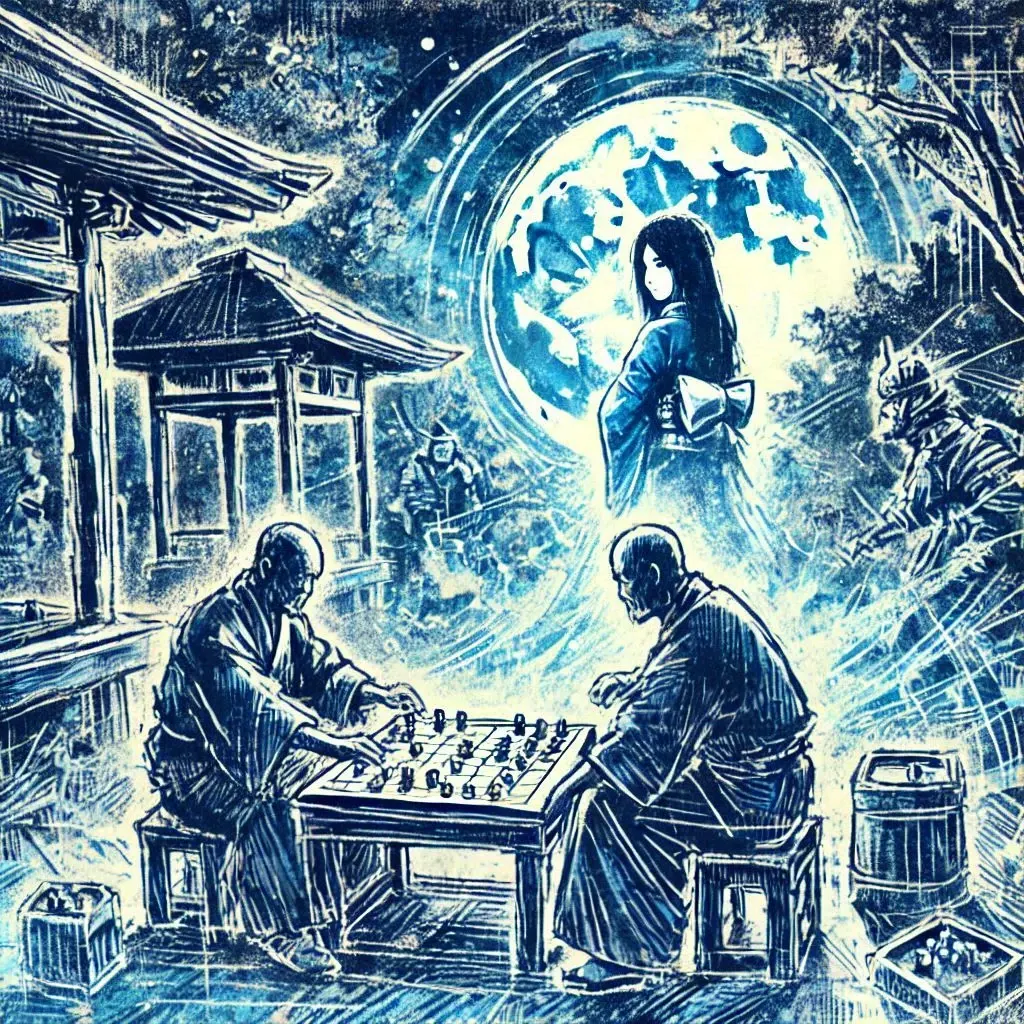
The Princess's Game
Ōgi (王棋, romaji: ōgi) is a variant of shōgi offering shorter and more dynamic games.
The term ōgi literally means the king's game
,
but it is also known as Hime Asobi (姫遊び, The Princess's Game
),
in reference to the protagonist of La Genèse de l'Enchanteresse.
This dual naming reflects the game's distinctive feature where the princess, alongside the king, plays a central role in strategy.
Starting Position
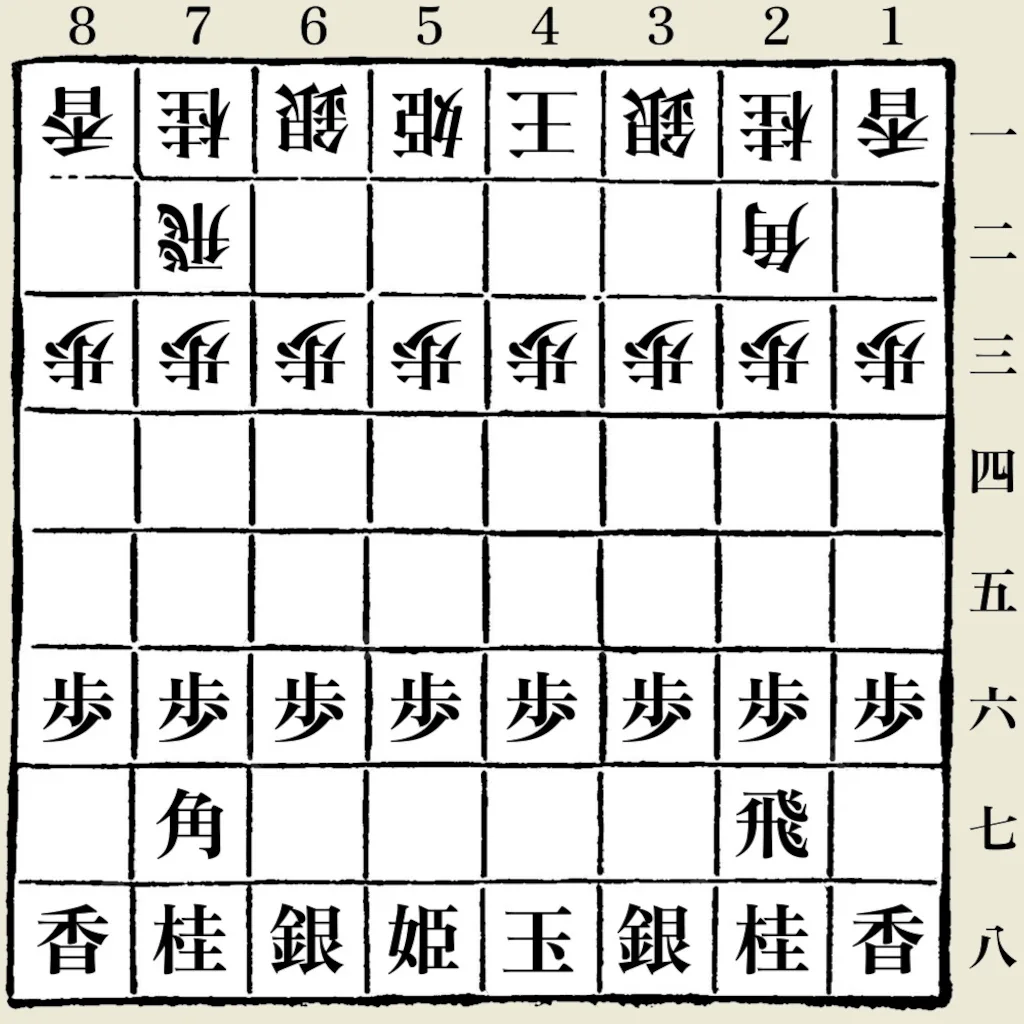
Differences from Traditional Shōgi
Ōgi retains the fundamental principles of traditional shōgi, including the drop of captured pieces and the promotion system. However, it differs on the following points:
- Board Size
- The game is played on an 8×8 grid, unlike shōgi's 9×9 board.
- Piece Composition
-
- The Gold Generals, the Silver Generals and the Lances are absent.
- Each side fields two Rooks and two Bishops, where shōgi has only one of each.
- The Knight leaps in an
L
shape in all eight directions, as in Western chess. - A new piece, the Princess (姫), is introduced. It combines the movements of the Bishop and the Knight.
- Promotion
- Only the Fu (the pawn) has a promoted form: the Tokin (と), which inherits the movement of the departed Gold General. The promotion zone shrinks to the last rank, where promotion is mandatory and automatic.
- The Double Step
- A Fu that has never moved may advance two squares in a single move, a borrowing from Western chess — without en passant capture, however, as Fu capture straight ahead.
- Castling
- The King may castle with either of his Rooks, exactly as in Western chess: the King moves two squares toward an unmoved Rook, which comes to stand on the square he has just crossed. A Rook dropped from hand has left its original square — it can never castle.
- Game Endings
- Stalemate and threefold repetition of the same position are draws, as in chess — whereas shōgi makes the stalemated player lose and waits for four repetitions. The 50-move rule also applies.